

Preparing for Motherhood as a new mom
Preparing for motherhood
Preparing for motherhood is not about getting everything right or living up to unsustainable standards. As women, we experience a lot of pressure to prepare perfectly for our baby’s arrival. We’re told by well-meaning family and friends, as well as marketing, that we need all the baby gear, a beautiful nursery, the perfect birth plan, and a perfectly curated baby registry to truly be prepared. While those preparations can be fun, what women truly need is support. Emotional support, Nervous system support, and the ability to slow down and experience pregnancy and birth with presence. Feeling supported helps you feel understood and less alone as you enter into motherhood.
Motherhood is one of the biggest identity shifts we, as women, can experience. Building a strong foundation of support can make the transition into motherhood peaceful and joyful. Motherhood changes more than just your schedule or your sleep; it changes every part of you on a mental, emotional, spiritual, and physical level. The reality is you can never really be fully prepared for motherhood; it's an experience that has to be lived to be truly understood.
But we can build a strong foundation before we enter motherhood, so that as we ride the waves of becoming a new mom, we have tools to ground us through the transition.
Emotionally preparing for motherhood.
Many of us enter motherhood carrying stress, anxiety, and unresolved childhood wounds. Many of us have lived most of our lives stuck in a state of survival. Then, suddenly, we are preparing to care for our baby. When I had my daughter, I thought I was prepared in every way I could be. My daughter was planned, and I had taken every step I could to prepare for her arrival. Still, motherhood brought changes, challenges, and responsibilities I couldn't have predicted. Motherhood broke me open and reshaped who I am. It has been the most beautiful experience of my life, but it hasn’t been easy.
Focusing on emotional healing, such as becoming aware of my own fears around birth and motherhood, and a better awareness of my own patterns, triggers, and traumas, would have made the transition feel so much smoother. We are human; we likely won't be fully healed before becoming mothers, but there are steps we can take to ease the transition.
For many women, this can look like:
learning emotional regulation tools
going to therapy or seeking trauma-informed support
journaling through fears around motherhood
grieving parts of your childhood
practicing self compassion
slowing down and resting more intentionally
learning how to ask for help
Motherhood has a way of exposing the parts of us that need healing. Motherhood tests our patience and calls us to love in a deeper way than we’ve ever experienced before. This is why emotional preparation matters: not so you can become the perfect mother, but to help you enter motherhood feeling grounded, supported, and intentional about your choices.
The Nesting instinct: Preparing your home for Baby
Nesting is the natural, intrinsic instinct we, as mothers, have to create a safe environment as we grow our baby. Nesting on social media is often reduced to cleaning sprees and organizing the nursery, but at a physiological level, it's about so much more. The nesting urge is our body's intuition or guidance system, letting us know that it's time to get to or create a safe environment for our baby. It's the instinct to create safety, comfort, and peace. Trusting this natural urge can help you feel more confident and connected to your intuition as a mother.
Preparing your home for motherhood doesn’t need to look expensive or Pinterest-perfect. Often, what feels the most supportive in those early days of motherhood is simplicity. It's helpful to create a space where your nervous system can feel at ease instead of constantly feeling on edge.
Nesting can manifest in many ways, such as:
Deep cleaning
Decluttering and organizing
Setting up the nursery
Creating a feeding station
Preparing freezer meals
Packing a hospital bag and a diaper bag
You will likely (although not all women do) experience the nesting urge during pregnancy, usually in the 3rd trimester. Lean into that instinct and let it guide you, but do so safely. Be extra careful not to overwork yourself; don't do any heavy lifting or anything that could be unsafe for you and your baby.
Remember, your home should support you, not just your baby. Little things like a basket by the bed for you during the postpartum period, with water, snacks, and comfort items, can help with late-night wakings. One of my favorite nesting preparations was a postpartum basket in the bathroom with a peri-bottle, pads, and other much-needed postpartum healing products. These little steps are simple but fun ways to care for yourself, because a well-rested, well-cared-for mom is the key to being prepared for motherhood.
Build your village: Preparing your relationship and Support System.
A huge misconception around motherhood is that we will naturally know what to do on our own. Yet, throughout human existence, young mothers have leaned on the wisdom of older, more experienced women in the early months of motherhood. Having even one trusted woman who is themselves a mother can make all the difference. My own mother played a huge part in my postpartum healing, as well as my grandmother. They helped me with simple tasks like cooking and cleaning so I could focus my time and energy on my baby. That's what I needed most: some women might be different and need help caring for their baby so that they can get a much-needed break. Either way, having a woman like your mother or a close friend you can feel comfortable leaning on during those vulnerable moments can help you heal more smoothly.
Building your village doesn't start at the end of pregnancy; our villages are often made up of people we already love and regularly seek support from. A good example of a strong support system can be as simple as a supportive spouse, your own mother or mother-in-law, a sister or close friend, or even members of a faith community. It doesn't have to be a huge circle of people. The key is that we have a few close people in our lives we can trust when we need support and are feeling vulnerable.
This also means preparing our support systems before the baby arrives by discussing with our partner (or the people closest to us) what expectations, emotional support, responsibilities, and postpartum recovery will look like. Knowing you have a plan and trusted people in place can help you feel more secure and supported during this transition.
A few steps we can take to build a support system would be:
setting boundaries with family members
asking trusted friends for support
arranging a meal train for after birth
finding local motherhood communities
So many mothers struggle silently because they feel guilty asking for help. Setting up a plan and system beforehand can ease that tension and help the people around us know what we may need before we are in a vulnerable state, where asking for help can become more difficult.
Creating a Birth Plan
When preparing for motherhood, we can't forget about birth, the real transition into motherhood, and your baby’s entrance into the world. Birth is important, and our birth experience can have a profound effect on our postpartum recovery and the start of our motherhood journey. But often the pressure to have the birth we want can become overwhelming and all-consuming. While we can create the perfect birth plan, do all the postpartum yoga, and take birthing classes, it's important to remember that birth is just one day, and how our birth unfolds is not the only determining factor in how we mother our baby.
I put so much pressure on myself to have a natural home birth. I did everything I thought I needed to have that outcome, and in the end, my home birth turned into a hospital transfer after we discovered my daughter was breech. The experience broke me, not just because it was traumatic but because my expectation and my desire to have a natural birth made it much more difficult to accept the outcome. Even after my experience, I still love birth, and I look back with joy and grief at my own birth experience. I say all this to say that while you may end up having the birth you want, either way, you can be the mother that you choose to be.
I struggled a lot with my identity after my home birth turned into a C-section. I am a naturalist at heart, and for some reason, I felt like I couldn't be that anymore after my birth ended in the hospital, but I’ve come to learn that even if my birth wasn't the perfect natural birth I wanted, I can still be the natural-minded mother that I desire to be. I exclusively breastfed my baby, ended up breastfeeding for over 2 years, co-slept from day one, and practiced babywearing and still do even now that she is a toddler. I didn't let my hospital birth experience stop me from consciously choosing who I wanted to be as a mother.
Birth can feel really vulnerable, especially for those of us who’ve experienced anxiety, trauma, and have concerns about the medical system. Doing your own research and intentionally choosing your birth preferences can help you know what to expect and reduce fear and uncertainty.
It's important for your birth plan to include things like:
Who will be your support system during birth
calming music and soft lighting
comfort measures and pain management preferences
aromatherapy or grounding techniques
What boundaries will you have around visitors
What postpartum preferences are important to you (i.e., skin to skin, delayed cord clamping)
questions you might have for your doctor or midwife beforehand
It’s important to be flexible because birth rarely unfolds exactly how we plan. The goal is to feel informed, respected, and emotionally safe throughout your birth experience.
Preparing for Postpartum
The postpartum period is a major physical and emotional transition. Your body is healing. Your hormones are shifting. Your identity is changing, and all of this is happening while caring for a newborn.
Preparing for postpartum ahead of time can make a huge difference in how supported you feel during those early weeks. In natural motherhood circles, the emphasis is often put on the postpartum healing period, and for good reason. Feeling supported, calm, and prepared for those early weeks can greatly increase your chance of feeling mentally well and healing physically. With all the pressure and negativity surrounding the postpartum period, women can often feel overwhelmed or even like struggling postpartum is inevitable. Yet, it's important to remember that the weeks after giving birth can also be among the most joyful and beautiful experiences of our lifetimes.
While I had some difficulty processing my birth and the trauma I experienced with an unexpected breech baby. The only way I can describe postpartum is honestly a sense of pure bliss. From the moment my warm, tiny baby was placed on my chest, I felt so much love that I remember crying tears of pure joy even after a difficult birth experience. The weeks after that, I spent resting, cuddling, nursing, and caring for my baby, as well as crying from joy and sometimes overwhelm. I was a beautiful mess; the only words I can think of to describe it would be raw, real, and blissful. Because of that, the postpartum period will always have a piece of my heart.
So don't let the fear-mongering get to you; it can be messy and hard, but that doesn't mean it has to be bad. It can be beautiful and awe-inspiring. The postpartum period is often one of overwhelming joy, and almost all mothers feel a deep love and connection for their babies and truly enjoy caring for them.
Some helpful things we can do to feel more prepared for the postpartum period are:
creating a postpartum basket with essentials nearby
preparing nourishing, easy-to-eat meals
setting up hydration stations
buying comfortable lounge clothing
Reducing unnecessary obligations after birth
planning for emotional support
creating simple rhythms to support healing
Preparing for motherhood is about so much more than preparing for a baby. It’s about preparing yourself, too. You deserve support as you enter this season. You deserve preparation that eases your fears and calms you just as much as it prepares you to care for your baby.
Motherhood grows and challenges us in ways we may not be prepared for, but we can at least establish support, rhythms, and a calming environment so you can feel at peace as you transition into the mother you desire to be.
If you want an intentional way to prepare for motherhood, emotionally, mentally, and practically. I created my Gentle Motherhood Preparation Guide to help support you through this transition. Inside, I share gentle routines, emotional preparation tools, nesting ideas, nervous-system support practices, and ways to build a calmer foundation for yourself before motherhood begins.
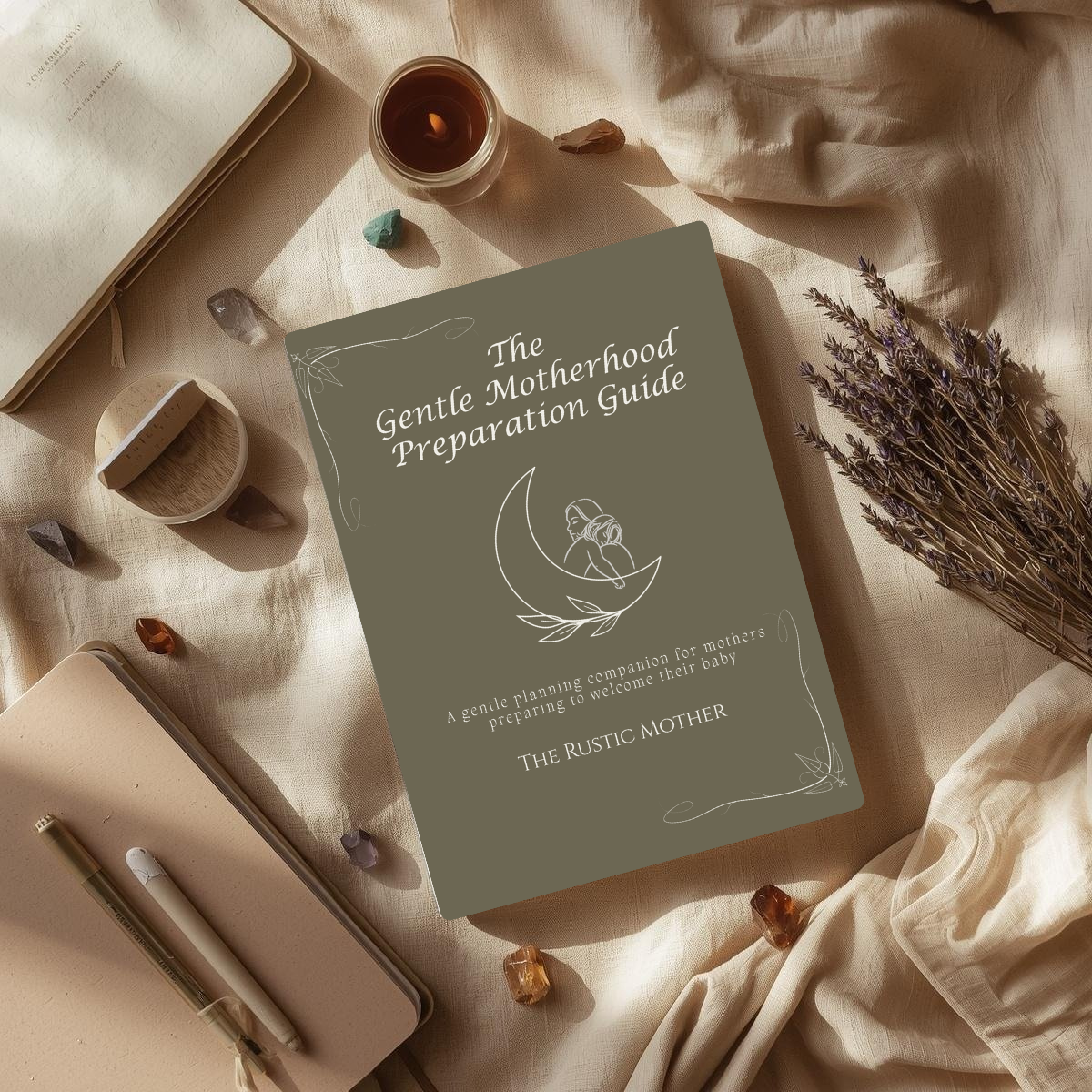
Newborn Preparation Guide for Expecting Mothers
Preparing for a new baby can feel exciting, emotional, and sometimes overwhelming. This thoughtfully designed Newborn Preparation Guide was created to help simplify the process and give mothers a gentle place to plan, reflect, and organize the essentials needed for welcoming a baby.
With calming, rustic-inspired pages and supportive guidance throughout, this printable guide helps you focus on what truly matters during this beautiful season of preparation.
This guide pairs perfectly with baby registries, birth planning, and preparing your home for your newborn.
This 12 page printable preparation guide includes:
• Newborn Essentials Checklist
• Nursery Essentials Checklist
• Feeding Essentials Checklist
• Postpartum Essentials for Mom
• Diaper Bag Essentials Checklist
• Hospital Bag Checklist
• Baby Registry Planning Page
• Preparing for Motherhood Reflection Page
• Notes & Planning Page
• A Letter to the New Mother
Each page was designed with a minimal aesthetic to create a calm and supportive planning experience.
Product Details
• Instant Digital Download
• Printable PDF
• 12 Pages
• High resolution files
• Print at home or use digitally on a tablet
No physical product will be mailed.
Shop More Motherhood Resources
Explore more gentle planning tools, affirmation cards, and healing resources inside The Rustic Mother shop.
